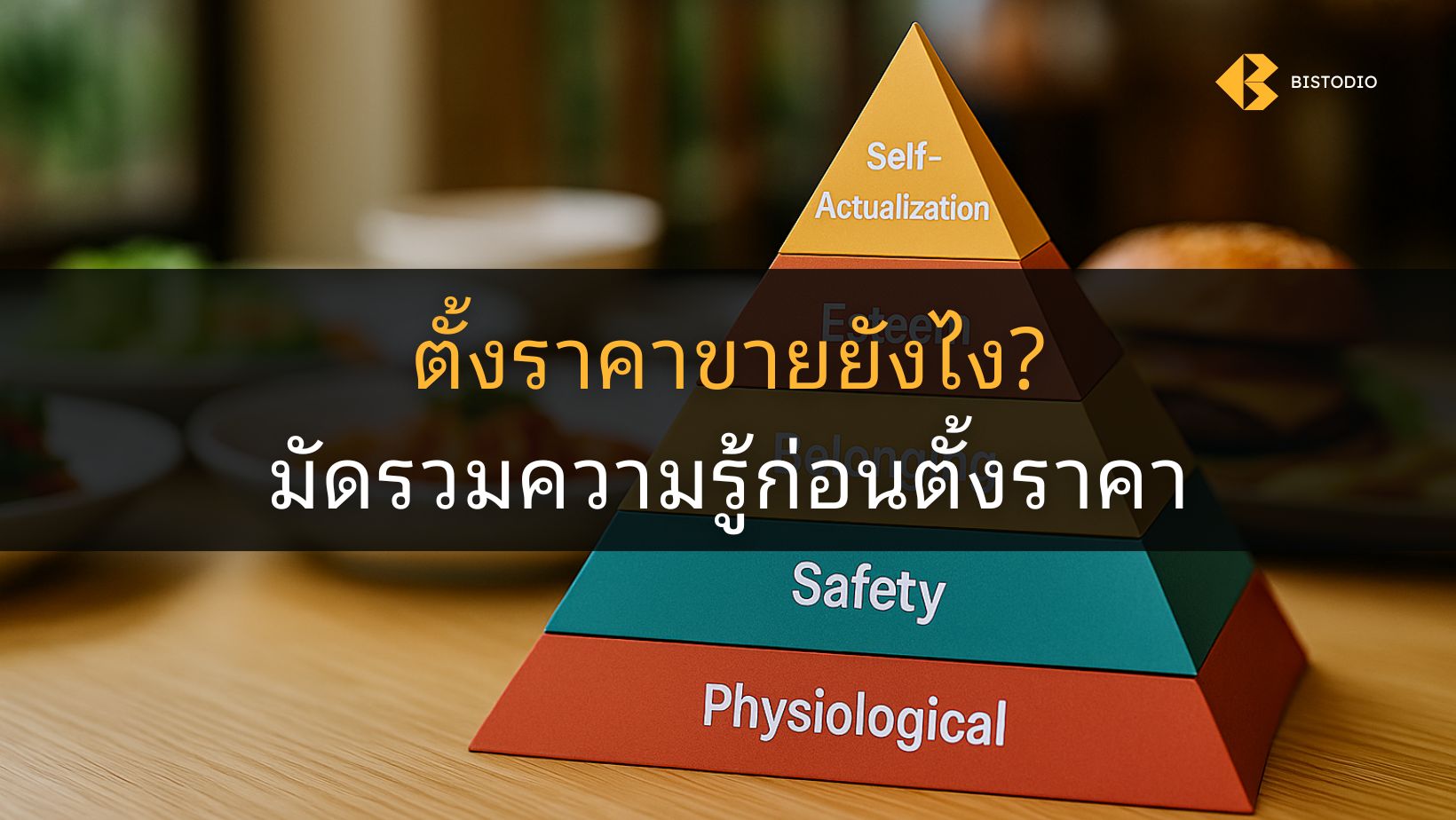
How to Price Your Food to “Survive” and “Grow”
A pricing strategy that truly understands customers, the market, and real costs
For food business owners who are serious about building a sustainable business
“Pricing is not just cost + profit.”
It’s the decision point where customers choose to pay… or walk away.
Up to 50% of new restaurants close within the first year, and more than 65% shut down within three years.
One of the key reasons is incorrect pricing—selling well but earning no profit, or pricing too high and losing customers.
Why Pricing Is a Psychological Game
Customers don’t know how much your costs are.
Customers don’t care how hard you work.
The only things they actually feel are:
- Is it worth the price?
- Is it memorable enough to come back again?
- Does it make them feel good?
First, Understand What You’re Really Selling
Before setting prices, identify what category your menu belongs to.
| ประเภท | ตัวอย่าง | กลยุทธ์ตั้งราคา |
|---|---|---|
| กินประจำ | ตามสั่ง, ข้าวแกง, ก๋วยเตี๋ยว | ราคาต้องเข้าถึงง่าย ซื้อซ้ำได้ |
| โอกาสพิเศษ | วันเกิด, เทศกาล | ตั้งราคาสูงขึ้นได้ ลูกค้ายอมจ่ายสูงขึ้นในบางโอกาส |
| พรีเมียม/ครั้งเดียว | Chef’s Table, เมนูท่องเที่ยว (เมนูที่นักท่องเที่ยวมักอยากลองเมื่อมาเยือนพื้นที่นั้นๆ) | เน้นประสบการณ์-อารมณ์-เรื่องราว ตั้งราคาได้ตามคุณค่า |
✅ Know the category first → Price to match customer expectations
Professional Costing: More Than Just Markups
Many food businesses lose money because they think:
Selling price – ingredient cost = profit
❌ Wrong.
Most businesses calculate only ingredient costs and forget hidden expenses such as:
- Staff wages
- Rent / equipment depreciation
- Utilities (water, electricity, gas)
- Marketing expenses
- Delivery costs
- Taxes
- Even the owner’s own labor
Example:
Ingredient cost per dish = 50 THB
Selling price = 100 THB → 50% gross margin
After overhead, actual net profit may drop to just 10–20% of sales.
How to Calculate Costs Safely
- Understand your full cost structure
- Know the true cost per dish, including hidden expenses
- Calculate the break-even point → how many dishes must be sold per day
💡 Knowing real costs tells you which menu items make money—and which ones quietly burn it.
Customers Buy Based on Feelings, Not Logic
“Why do people return to the same restaurant—even when a new place tastes better?”
Because they remember how they felt.
This is called Brand Affinity—a bond more powerful than “good taste” alone.
- New restaurants → create a strong first impression
- Established restaurants → maintain consistency and deepen emotional connection
Understand Customers Using Maslow’s Hierarchy
People satisfy basic needs first, then move to higher-level desires.
| ลำดับ | สิ่งที่ลูกค้าต้องการ | ตัวอย่าง |
|---|---|---|
| ความต้องการทางกายภาพ (Physiological) | อิ่ม คุ้ม | ร้านข้าวแกง, อาหารตามสั่ง |
| ปลอดภัย (Safety) | ปลอดภัย สะอาด | ร้านออร์แกนิค, Low-sodium |
| สังคม (Belonging) | ตรงกับไลฟ์สไตล์ | ร้านวีแกน |
| ภูมิใจในตัวเอง (Esteem) | ภูมิใจ มีรสนิยม | Fine Dining |
| พัฒนา-เติมเต็มตัวเอง (Self-Actualization) | สิ่งที่ดีที่สุดเพื่อตัวเอง | คอร์สอาหารเฉพาะบุคคล |
📌 Don’t sell premium prices to customers seeking savings
📌 Don’t sell ordinary products to customers seeking something special
Make Customers Feel “It’s Worth It” and “It’s Convenient”
Customers judge value by what they receive, not by your internal costs.
What customers value:
Quality & Safety
- Taste and portion size
- Ingredient quality
- Cleanliness and hygiene
- Health-conscious options
Experience & Convenience
- Uniqueness and novelty
- Attentive, fast service
- Atmosphere (photogenic, comfortable, private)
- Amenities such as child-friendly facilities and accessibility for people with disabilities
- Easy accessibility (parking available, convenient transportation)
- Reputation and popularity (FOMO)
Price Perception
- Price aligned with purchasing power
- Packaging suitable for gifting
- Compared to competitors, customers feel they get more
✅ Price so customers feel: “I got more than I paid for.”
Restaurants that create memorable experiences earn repeat customers—and survive long term.
Storytelling Makes Food Taste Better in the Brain
Two identical dishes. One is perceived as “more delicious.”
Why?
- Dish A: plated beautifully, story explained, ingredients and inspiration shared
- Dish B: served plainly
Customers consistently say Dish A tastes better—even though it’s identical.
This happens because the medial orbitofrontal cortex responds to perceived value, not just flavor.
💡 Stories don’t change taste—but they increase satisfaction in the brain.
Price × Volume Strategy
Choose a model that fits your strengths and market.
| ตลาด | ราคาขาย | ปริมาณ | ตัวอย่าง |
|---|---|---|---|
| Mass Market | ราคาเข้าถึงง่าย | มาก | ข้าวแกง, ตามสั่ง |
| Mass Premium | กลาง-สูง (แต่เข้าถึงได้) | ปานกลาง-มาก | คาเฟ่ดัง |
| Premium/Niche | สูง | น้อย | Chef’s Table, Fine Dining |
| Low-Low | ต่ำ | น้อย | ❌ ไม่ยั่งยืน |
Ask yourself:
- Which strategy fits your menu?
- Who is your target customer?
- Can your kitchen support the volume?
⚠️ Avoid being “stuck in the middle” with no clear positioning.
 Not cheap enough → Customers don’t rush to buy Not expensive enough → Customers don’t perceive it as premium No clear differentiation → Customers don’t remember it
Be Careful When “Adding Value”
Worth trying once, but not compelling enough to come back
> Value that’s too high for purchasing power = one-time trial only.
Signs customers won’t return:
- Beautiful place but too expensive → one photo visit
- Slightly better taste, much higher price
- Good but forgettable
- Not the best → not talked about
Luxury décor may attract first-time customers, but if price exceeds perceived value, they won’t return.
- Small businesses may try to position their products as premium, but customers often still gravitate toward cheaper alternatives.
- There’s no need to join a price war—but don’t raise prices so high that your market becomes too small.
💡 Add value in a way that makes customers want to come back—at a price that still allows healthy profit.
✅ Restaurants that survive in the long term don’t rely on one-time purchases—they are built on repeat customers.
Use Theory Wisely—Don’t Memorize It
Theory = a guideline, not a universal rule.
❌ “Food cost must be under 35%” — this doesn’t work for every type of restaurant
❌ “Labor cost must stay under 20%” — this may not suit small businesses where staff multitask
🔎 Theory = guidance
✅ Analyzing your own business = essential
- Large restaurants → better ingredient pricing / established systems / specialized roles
- Small restaurants → higher purchase costs / multitasking staff / owners do everything themselves
Applying large-restaurant standards to a small restaurant
is like wearing a suit tailored for someone else—it simply won’t fit.
✅ Theory is something you should know, but more importantly, understand before applying it.
Always analyze your own context first to determine what truly works for your restaurant and your target customers.
Step-by-Step Food Pricing Process
- Collect all cost categories
- Calculate cost per dish
- Analyze the market and competitors
- Test price elasticity
- Choose a clear pricing strategy
- Launch and test
- Collect feedback and improve continuously
📌 Buyers prefer things that feel simple and intuitive—not technically perfect but confusing.
FAQ
Bistodio Perspective
Q: What percentage should costs be?
A: There’s no fixed number. It depends on food type, target customers, and competition. Businesses should aim for at least 10–20% net profit, or ensure absolute profit is sufficient.
Feasibility analysis is strongly recommended.
Q: Why doesn’t Bistodio follow popular online rules?
A: Most rules are averages from businesses that already have strong systems. Applying them blindly may weaken your competitive advantage.
Q: Will raising prices lose customers?
A: Possibly some—but loyal customers stay if quality and experience remain strong. Selling at a loss raises a bigger question: why run the business at all?
Q: Is differentiation better?
A: Yes—if your value proposition is clear. But being too different can confuse customers (N400 effect).
Conclusion
Great food pricing is both science and art.
- Science → cost calculation and market analysis
- Art → understanding customers and delivering perceived value
💡 When done right, customers don’t just buy—they return and recommend, helping your business survive and grow sustainably.